
Simulating Dementia
New program builds empathy and understanding
by Phil Saken
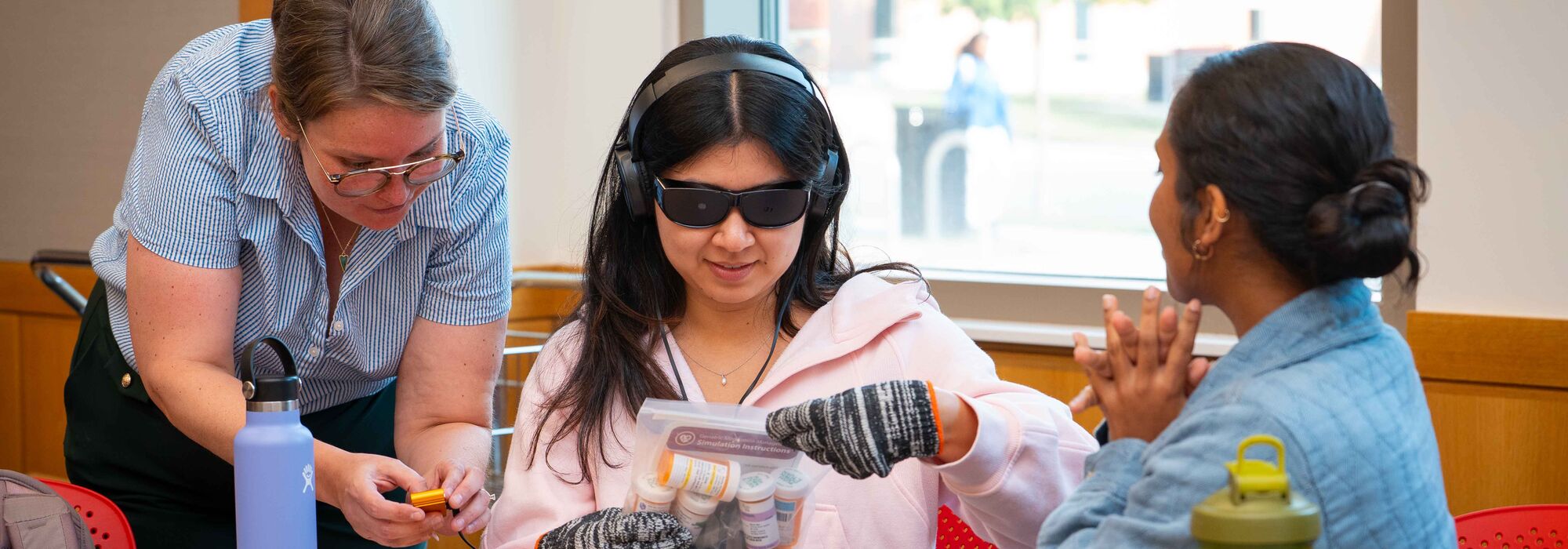
At a simulation session in September, (pictured above) first- and second-year medical students interested in neurology gained a new perspective on the difficulties people with dementia and their caregivers face every day.
The “Dementia Experience” program outfits participants with vision impairment-inducing glasses, thick gloves and MP3 players with audio files that replicate dementia symptoms such as auditory hallucinations and auditory overload. Together with a participant role-playing a caregiver, they must complete common activities of daily living such as paying bills on time, managing medications and preparing meals. The combination of these tools and real-world tasks creates a sensory overload that can simulate cognitive challenges.
This simulation is coupled with expert-led education on types of dementia and resources to support people living with dementia and their caregivers. The “Dementia Experience” is one of several simulation-based modules being developed as part of the “Aging360: Empathy in Practice through Simulation” program, jointly created by the Golden Buckeye Center for Dementia Caregiving and the College of Medicine’s Office of Geriatrics and Gerontology.
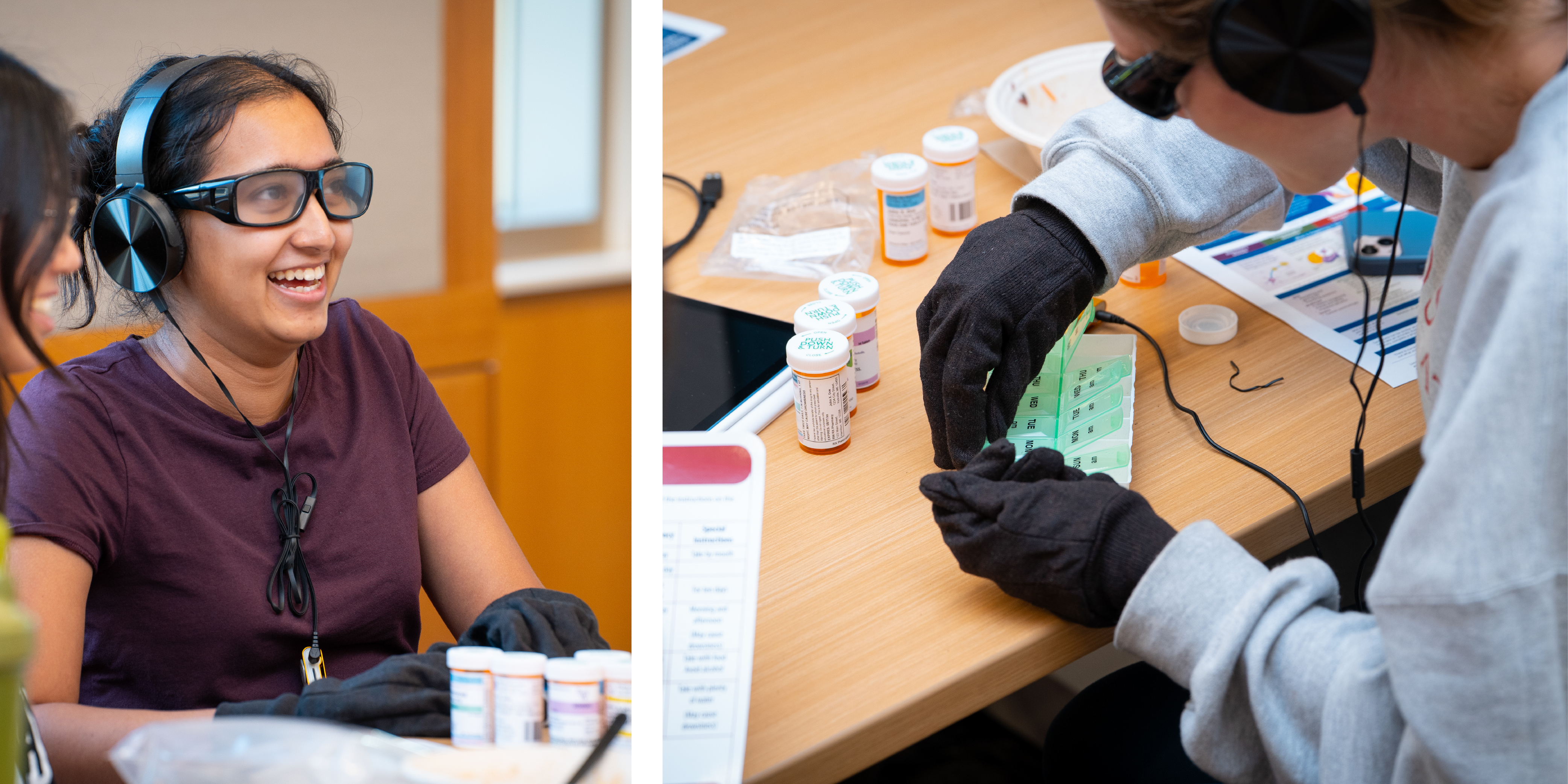
Students rated the training highly and said that it opened their eyes to how frustrating, stressful, challenging and fatiguing living with dementia can be. They gained new insight on the importance of providing the right amount of support to a person with dementia while preserving their independence and dignity. Many commented that they intend to improve their communication with patients and caregivers in future interactions.
“We had those glasses on, and already I was kind of feeling some despair,” said first-year medical student Ana Burk, who has worked with dementia patients through volunteer opportunities. “At the end of the day, we take those glasses off. And people with dementia don’t get to do that.”
“The end result of all of this is enhanced understanding and empathy of the lived experience, leading to providing quality, compassionate, person-centered care in future encounters,” said Morgan Angles, MPH, CHES, assistant director of the Golden Buckeye Center. Angles is pictured above (left) assisting students in the simulation.

In this Issue
- Every Nurse is an Innovator
- New Accelerated Nursing Program
- Biomarker Summer Institute
- Communicating Pain
- Study Abroad in Cyprus
- Grants Roundup
- Buckeye Inspiration: Jackie Buck
- Student Life: Jen Huynh
- Impact of Giving: Carol and Roger McClure
- Farm Science Review
- Alumni in Action: Hannah Henry
- Simulating Dementia