

Every Nurse is an Innovator
Building a culture of creativity, courage and connection at Ohio State
by Shane Gahn
Nurses have always been innovators: We problem-solve on the fly, adapt under pressure and advocate fiercely for patients. Innovation belongs to everyone who sees something that isn’t working and cares enough to make it better. That’s what we’re teaching our students at the College of Nursing, so that when they graduate, they leave ready to innovate.
As a nurse and faculty member, I have never been afraid to challenge outdated and wasteful practices or offer new ideas. However, I didn’t think of myself as an innovator until I attended the yearly Innovation Fellows Pitch event at Ohio State. The following year, I applied to the Innovation Fellowship and gained tools, mentorship and confidence to turn my ideas into action. I developed an education project to teach nursing students and faculty that innovation isn’t reserved for tech entrepreneurs or research scientists; innovation is for nurses too.
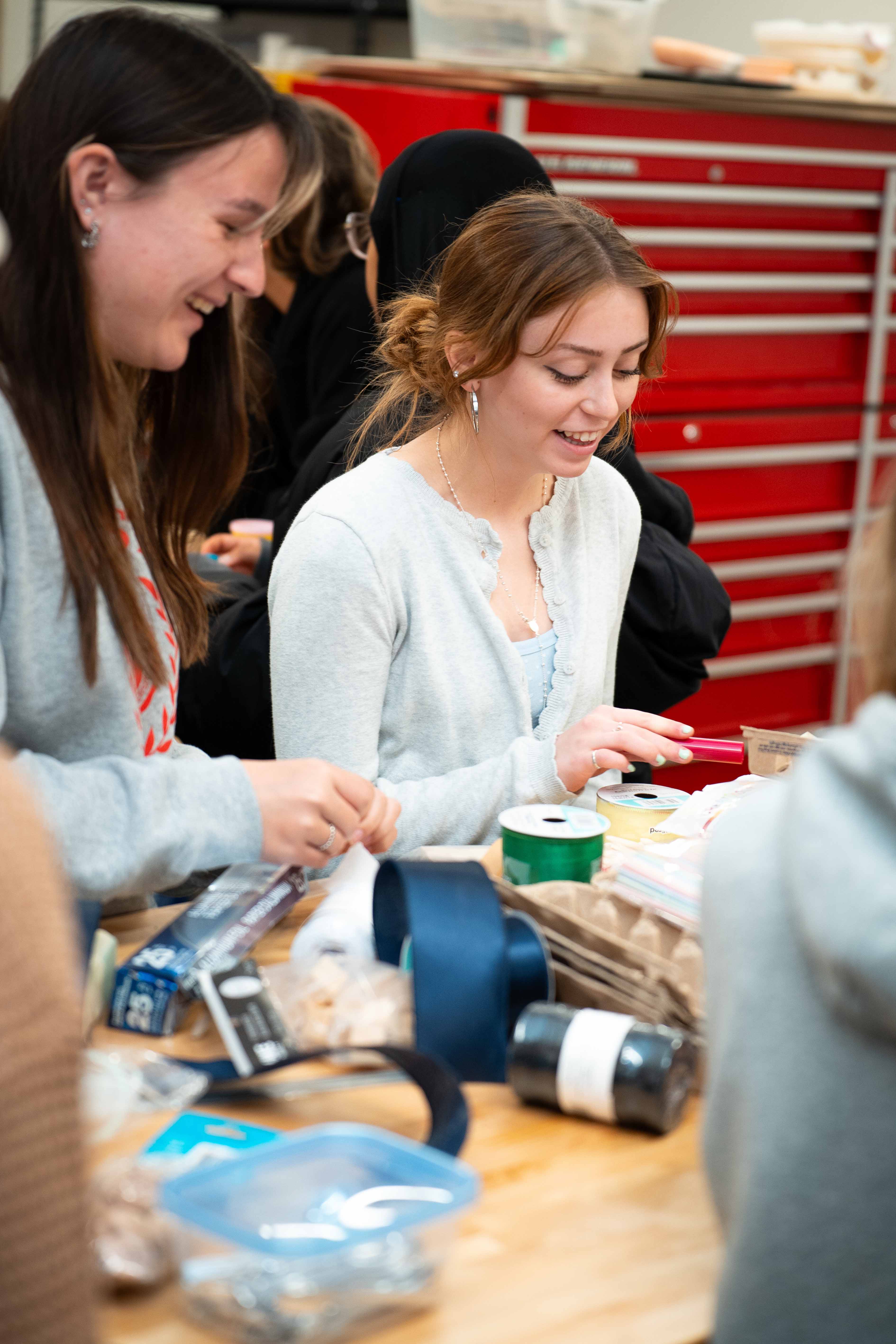
My project was used to build innovation competencies into the undergraduate nursing curriculum at Ohio State. In Nursing 2200: Art of Professional Nursing I, students are introduced to innovation through discussion and short, engaging video micro-learnings. Then in Nursing 2201: Art of Professional Nursing II, students identify real-world healthcare problems they’ve encountered or observed and work in small groups at the Innovation Studio at the Connie Hahn Sharpe and Gary Sharpe Innovation Center to brainstorm and prototype potential solutions. We’ve also begun to pilot these competencies in the DNP program.
What innovation means in nursing
When we talk about innovation in healthcare, people often think of devices or products, such as the Bag Below Bladder (b3) Buddy. An innovative team, led by clinical nurse specialist Karen Meade, along with interdisciplinary partners, created the b3 Buddy to enhance patient dignity and mobility in the hospital setting. Sometimes, though, innovation is simply about improving how we do things and creating value, one small step at a time. For instance, College of Nursing faculty members Morgan Wiggins, DNP, APRN-CNP, and Shannon Linder, DNP, APRN-CNP, created a transition-to-practice initiative to support new graduate nurses as they enter complex healthcare settings with mentorship, leadership training and systems navigation support.
In this video, innovators of the b3 Buddy device talk about working with the Innovation Studio.
At its core, innovation is a mindset. We want our students and faculty to look deeply at problems, think creatively and develop meaningful solutions. I often tell my students, “You don’t have to be an engineer to be an innovator. You just need a problem that matters to you enough to have the courage to explore solutions and find the right team to make something happen.” Interdisciplinary collaboration and connection are integral to successful innovation.
Our students learn about innovation competencies that already exist within them: creativity, courage and connection. These “three Cs of innovation” are the foundation of the innovation mindset. It takes courage to innovate, whether you are standing up for disadvantaged populations or challenging protocol that doesn’t make sense. You need creativity to come up with new solutions or to change solutions that already exist to make them more feasible, faster or safer. Connection is all about reaching out to other people who can help you realize your innovation – whether that’s designers, healthcare providers, pharmacists, biomedical engineers or other nurses. You need to be able to connect with patients, populations and other institutions, too.
The Innovation Studio: a space for transformation
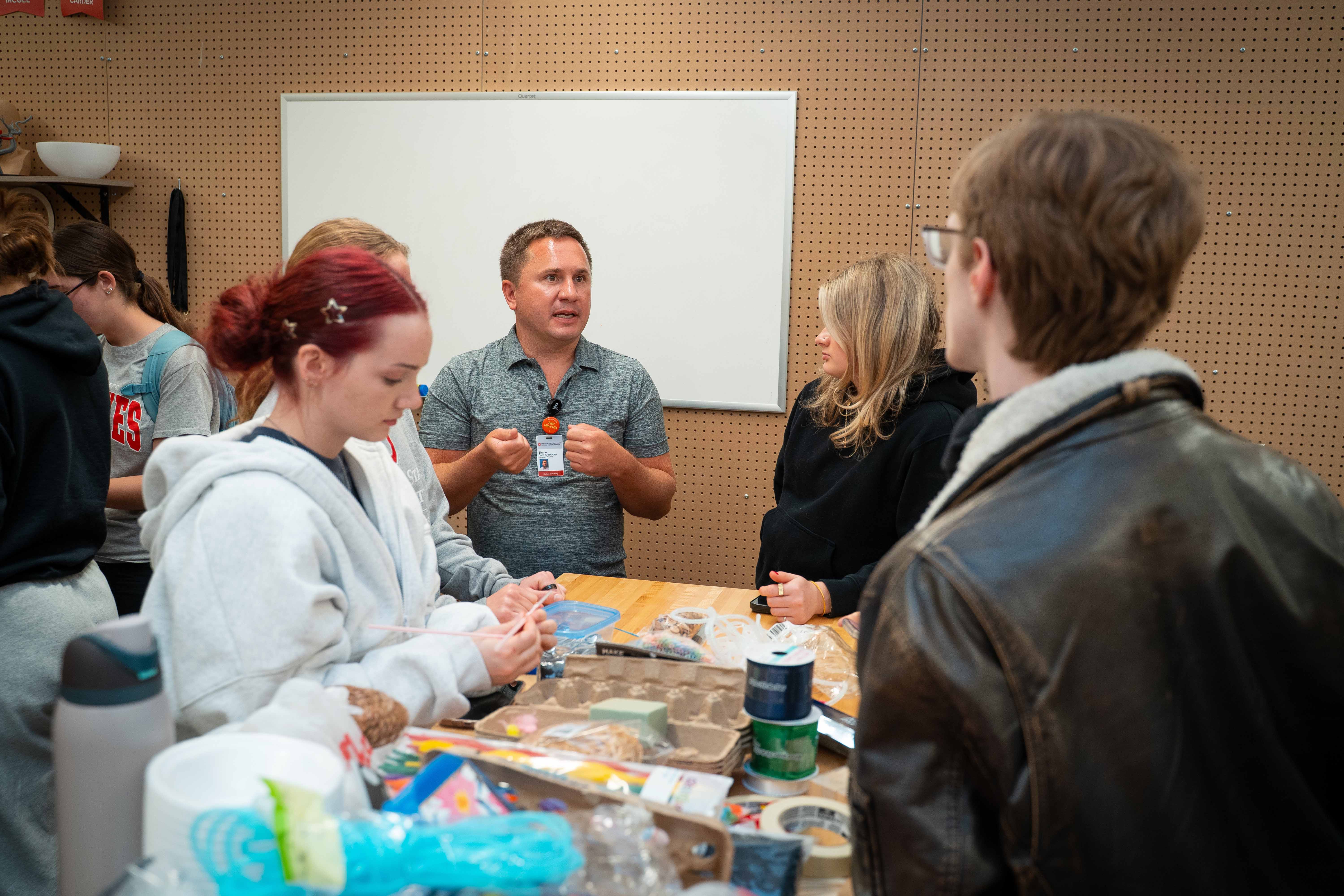
The Innovation Studio at the Connie Hahn Sharpe and Gary Sharpe Innovation Center in Heminger Hall gives Ohio State nursing students a unique place to bring their ideas to life. This creative maker space is open to all students, faculty and staff and is filled with tools like 3D printers, laser cutters and prototyping materials.
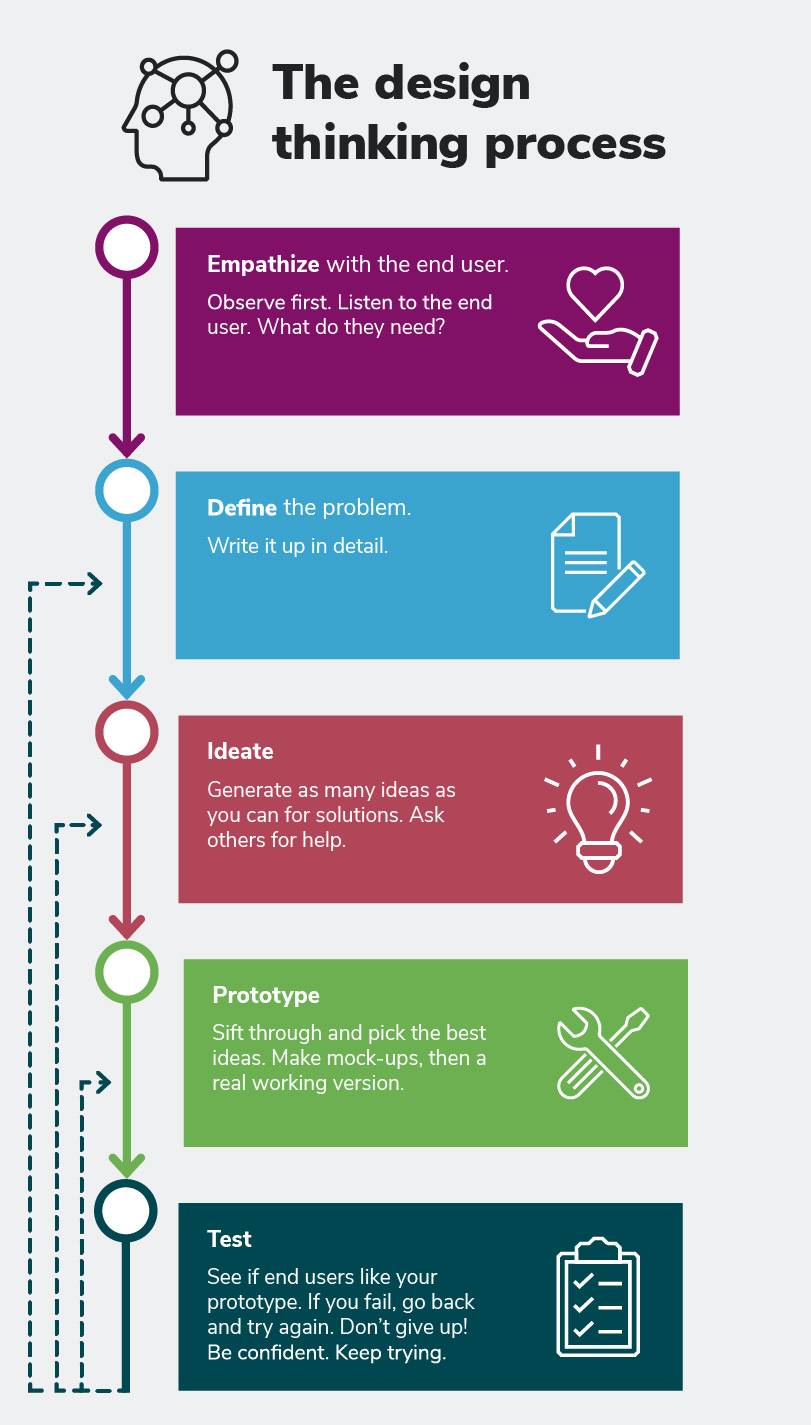
During a design challenge, students are invited to think differently, work collaboratively and take risks. Many struggle at first because of their previous expectations to work within the lines, but they quickly put their strengths and interests into action through the design thinking process (see chart below) and are able to create a thoughtful solution.
The feedback we’ve received from students has been overwhelmingly positive. Student nurse Lamisa Khan wrote, “Working in the Innovation Studio was one of the most creatively rewarding experiences of nursing school so far. I was impressed right away by the open-endedness of the challenge; we were being asked to think outside the constraints of conventional healthcare tools and envision something new. I was excited and a little daunted, initially. Healthcare can at times be so rigid, so protocol-driven, that the opportunity to innovate something without constraints felt both exhilarating and unfamiliar.”
The Innovation Studio team also holds workshops and sessions to introduce the tools and mindset of innovation to our faculty. Incorporating innovation doesn’t require overhauling a course; rather, it can start with a single assignment, a simple mindset shift or an invitation to collaborate across disciplines.
If you’re teaching, I encourage you to give students a chance to speak up, explore and take risks. You can find allies across your institution: collaborate with engineering, business or design experts. Look for spaces and tools that already exist like makerspaces or entrepreneurship centers and bring nursing students into those environments.
Shane Gahn, DNP, APRN-CNP, is a clinical assistant professor of practice in the College of Nursing.
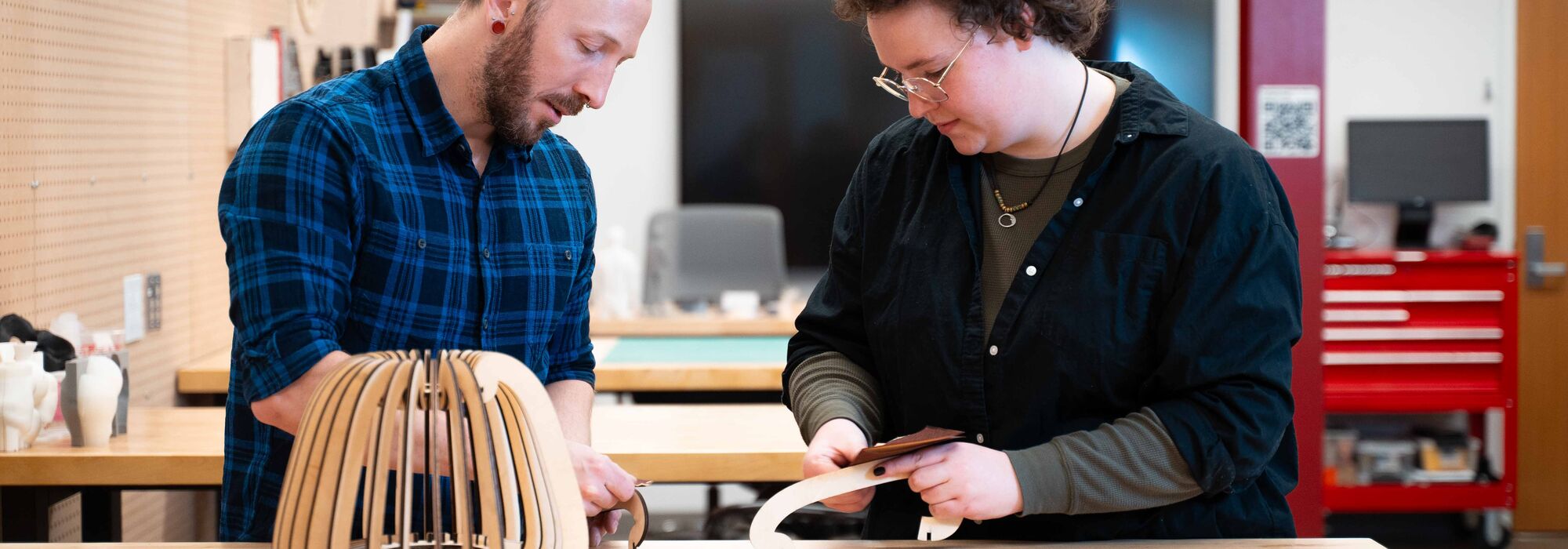
Shane Gahn tells why he chose the DNP degree program at Ohio State.
In this Issue
- Every Nurse is an Innovator
- New Accelerated Nursing Program
- Biomarker Summer Institute
- Communicating Pain
- Study Abroad in Cyprus
- Grants Roundup
- Buckeye Inspiration: Jackie Buck
- Student Life: Jen Huynh
- Impact of Giving: Carol and Roger McClure
- Farm Science Review
- Alumni in Action: Hannah Henry
- Simulating Dementia