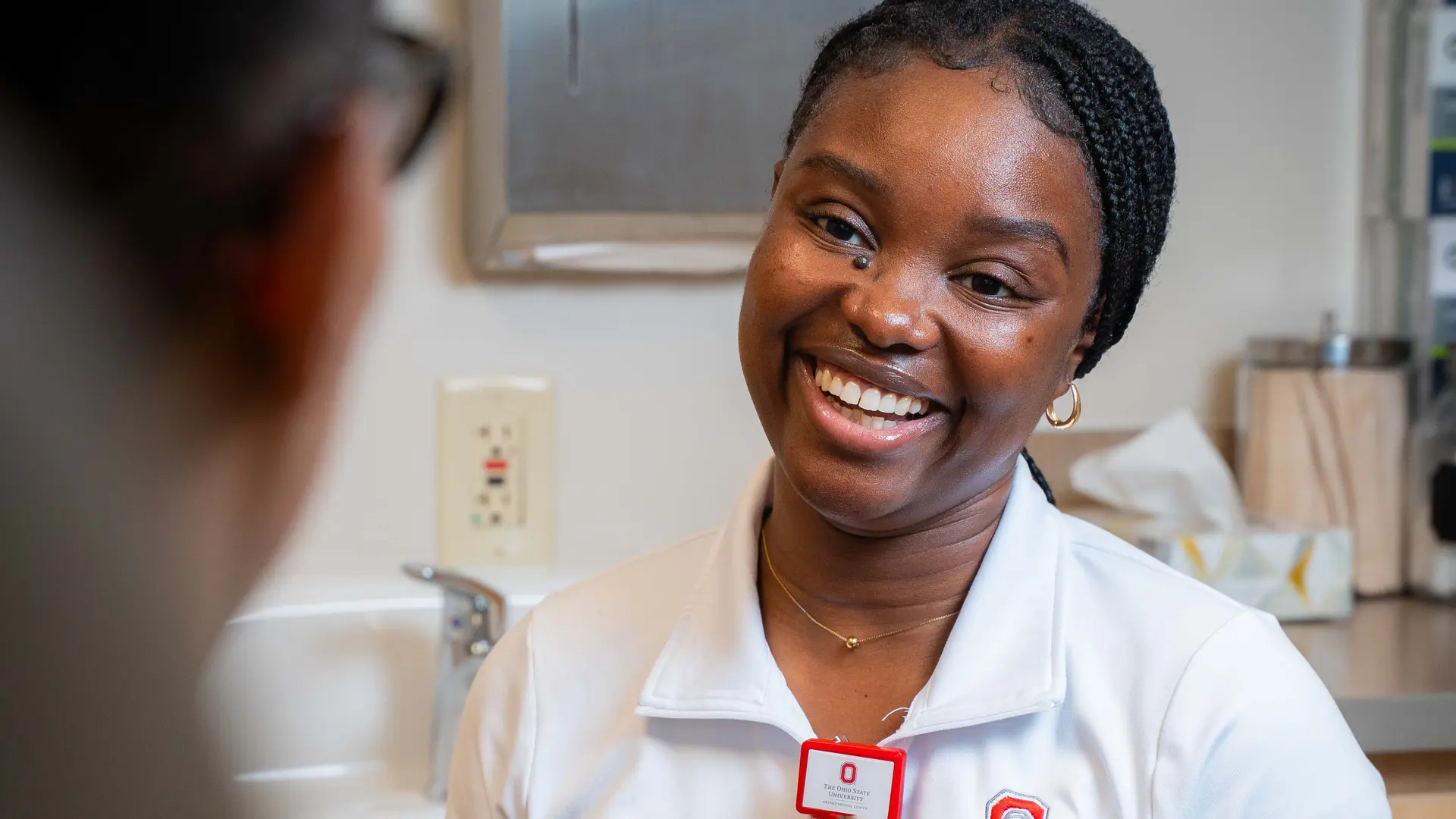
Women's Health Nurse Practitioner
Use your expertise to serve as a trusted healthcare provider that delivers holistic, client-centered primary care to women from adolescence through the adult lifespan ensuring both preventive and specialized gynecologic and reproductive health services.
What is a women's health nurse practitioner?
A women's health nurse practitioner (WHNP) is an advanced practice registered nurse (APRN) who provides holistic, client-centered primary care for women from puberty through the adult lifespan. WHNPs provide comprehensive gynecologic, sexual and reproductive healthcare, manage common and complex conditions, support patients through menopause and healthy aging, deliver preventive care and patient education, and offer both uncomplicated and high‑risk antepartum and postpartum services, including selected reproductive health services for men. With comprehensive clinical expertise to assess, diagnose, interpret tests, order treatments and prescribe medications, WHNPs practice in a wide range of clinical environments.
Apply through one of our programs
Visit the program page to learn more about admission requirements, curriculum and how to apply.
On campus
- Non-nurses seeking master’s level preparation
- Nurses seeking master’s level preparation
- Certified advanced practice nurses seeking additional specialization
- Nurses seeking advanced leadership training and the highest level of clinical education
- Nurses seeking to lead research and shape the future of healthcare
Our graduates enter the workforce with the skills and competencies to:
- Assume an advanced practice role as a women’s health nurse practitioner.
- Integrate theory and evidence into care for individuals across the reproductive and gynecologic health spectrum.
- Design, implement, and evaluate health strategies for selected populations.
- Use leadership skills and ethical principles to influence policy and promote positive health outcomes.
- Engage in evidence-based practice by identifying clinical problems, evaluating evidence and applying it to patient care.
- Adapt professionally to the evolving healthcare environment.
- Contribute to the advancement of the women’s health nursing profession.
Students will develop advanced knowledge and clinical expertise through specialty-focused coursework and immersive, supervised clinical practicum experiences. Clinical rotations allow students to apply these competencies in real-world settings under the guidance of expert preceptors. Clinical experiences meet the requirements for national certification in this specialty and are completed in approved sites across Ohio. Students typically complete 16 to 20 hours per week of precepted clinical practice during their clinical courses.
The WHNP curriculum is aligned with the American Association of Colleges of Nursing, Essentials: Core Competencies for Professional Nursing Education; the National Organization of Nurse Practitioner Faculties, NP Role Core Competencies; and the National Association of NPs in Women’s Health Women’s Health Nurse Practitioner: Guidelines for Practice and Education. Graduates are eligible for national board certification as a Women’s Health Nurse Practitioner through the National Certification Corporation.
Courses include:
- Nursing 7410 Advanced Health Assessment
- Nursing 7415 Clinical Reasoning with Diagnostic Methods for Advanced Nursing Practice
- Nursing 7450 Pathophysiology of Altered Health States
- Nursing 7470 Advanced Pharmacology in Nursing
- Nursing 7281 Advanced Reproductive Dynamics
- Nursing 7298.01 Advanced Practice Nursing: Women’s Health Clinical Practicum I
- Nursing 7298.02 Advanced Practice Nursing: Women’s Health Clinical Practicum II
- Nursing 7298.03 Advanced Practice Nursing: Women’s Health Clinical Practicum III
- Nursing 8895 Advanced Practice Nursing: Final Professional Seminar
For more information on curriculum, visit the academic program page of the degree you are seeking.
At Ohio State, you’ll train within one of the nation’s top comprehensive health sciences centers, gaining clinically rigorous, evidence-based experience guided by world-class faculty and dedicated mentors. You’ll build skills across diverse settings — from community-based primary care agencies to The Ohio State University Wexner Medical Center — while developing competencies in screening, contraceptive and fertility management and commonly performed clinical procedures. Through hands-on learning, interdisciplinary collaboration and the support of expert preceptors, you'll graduate prepared to advance health.