Adult-Gerontology Acute Care Nurse Practitioner
Prepare to diagnose, manage and treat acute, complex and rapidly changing conditions in adolescents, adults and older adults across high-acuity healthcare settings.
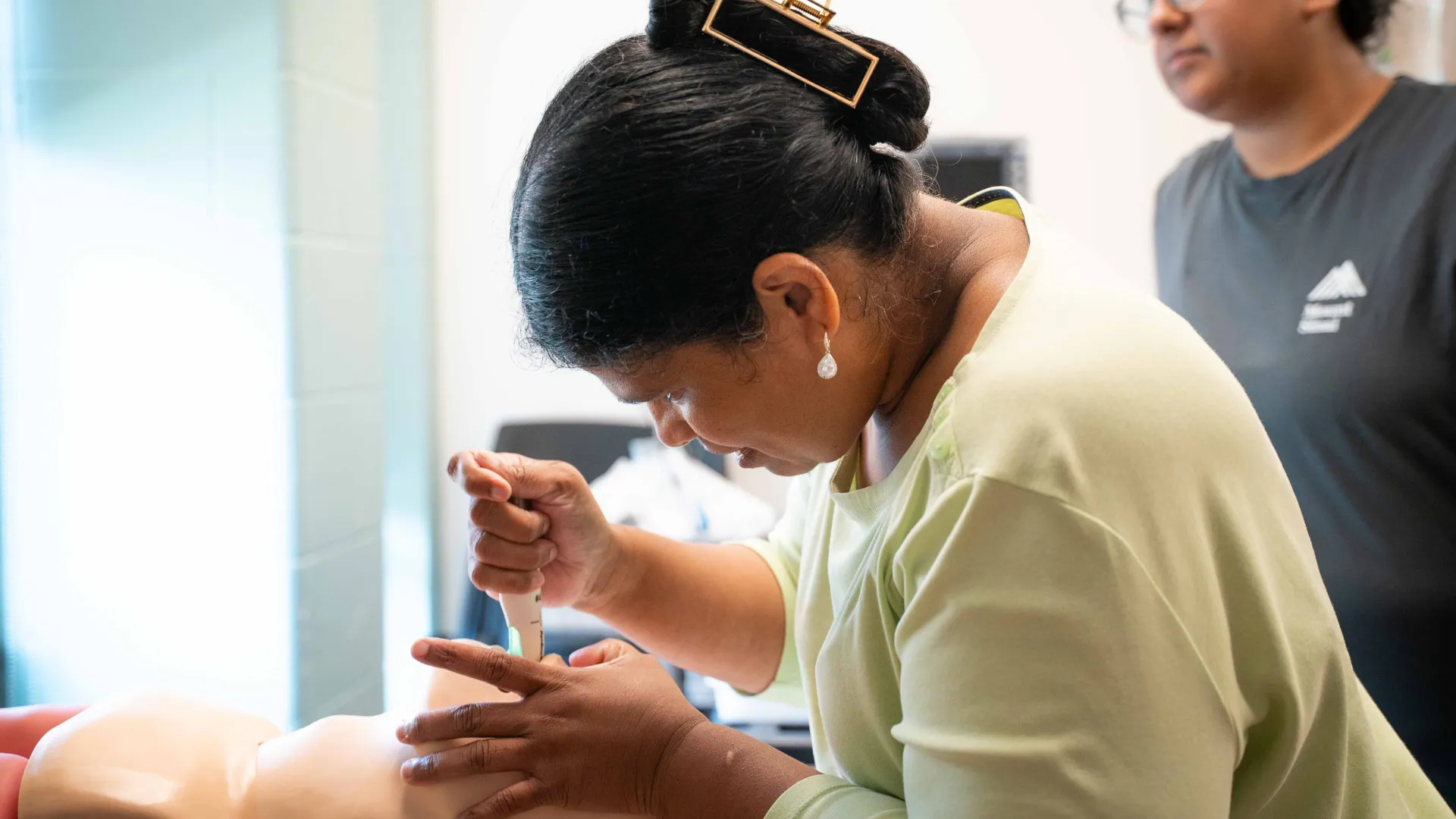
At Ohio State, you’ll prepare for advanced practice within one of the nation’s leading academic health science centers, learn from expert faculty, train in advanced simulation environments, and complete clinical experiences that prepare you for the realities of acute and critical care practice.
U.S. News & World Report rankings
- #5 through our master's program
- #7 through our DNP program
Apply through one of our programs
Applicants must have at least one year of full-time RN experience in an adult acute care setting. Experience preferably in an intensive care unit or other high-acuity environment, prior to applying to the program. Visit the program page to learn more about admission requirements, curriculum and how to apply.
On campus
- Nurses seeking master’s level preparation
- Certified advanced practice nurses seeking additional specialization
- Nurses seeking advanced leadership training and the highest level of clinical education
- Nurses seeking to lead research and shape the future of healthcare
What is an adult-gerontology acute care nurse practitioner?
An adult-gerontology acute care nurse practitioner (AGACNP) is an advanced practice registered nurse (APRN) who specializes in the treatment of serious illnesses and the management of complex, rapidly changing health conditions in adolescent, adult and older adult populations. AGACNPs assess, diagnose and manage unstable clinical situations, coordinate complex treatment plans and collaborate with interdisciplinary teams to deliver high-quality, evidence-based care in high-acuity environments. Patients require advanced monitoring and intervention, timely clinical decision-making and ongoing management of evolving health needs.
Graduates are prepared to:
- Assess, diagnose and manage acute and complex health conditions using evidence-based care
- Build therapeutic, patient- and family-centered relationships that support shared decision-making
- Educate and coach patients and families on conditions, treatments and self-management
- Demonstrate professional accountability in advanced practice nursing
- Coordinate care across complex healthcare systems and collaborate with interdisciplinary teams
- Deliver equitable, culturally responsive care to diverse adult and older adult populations
Graduates are eligible for national board certification through:
- American Nurses Credentialing Center
- AACN Certification Corporation
Build advanced clinical knowledge through focused coursework and supervised practicum experiences.
As a student, you will:
- Apply skills in real-world clinical settings
- Train under the guidance of expert preceptors
- Complete clinical experiences at approved sites across Ohio
- Spend 16-20 hours per week in clinical practice during practicum courses
The curriculum meets national standards set by the American Association of Colleges of Nursing and the National Organization of Nurse Practitioner Faculties.
Courses include:
- Nursing 7410 Advanced Health Assessment
- Nursing 7450 Pathophysiology of Altered Health States
- Nursing 7470 Advanced Pharmacology in Nursing
- Nursing 7415 Clinical Reasoning with Diagnostic Methods
- Nursing 7208.01 Adult-Gerontology Acute Care Nurse Practitioner Practicum I
- Nursing 7208.02 Adult-Gerontology Acute Care Nurse Practitioner Practicum II
- Nursing 7208.03 Adult-Gerontology Acute Care Nurse Practitioner Practicum III
- Nursing 8895 Professional Role of the Advanced Practice Registered Nurse
FAQ
No, the AGACNP program is offered on-campus only.
The primary difference is in the type of care they provide. Acute care nurse practitioners stabilize patients with severe or critical or life-threatening conditions and focus on short-term care. Primary care nurse practitioners manage long-term health from a holistic perspective, screen for diseases, provide well care and help patients manage chronic conditions.
AGACNPs work in a variety of settings including but not limited to:
- Hospitals
- Intensive care units (ICUs)
- Emergency departments
- Step-down and specialty units
- Urgent care centers