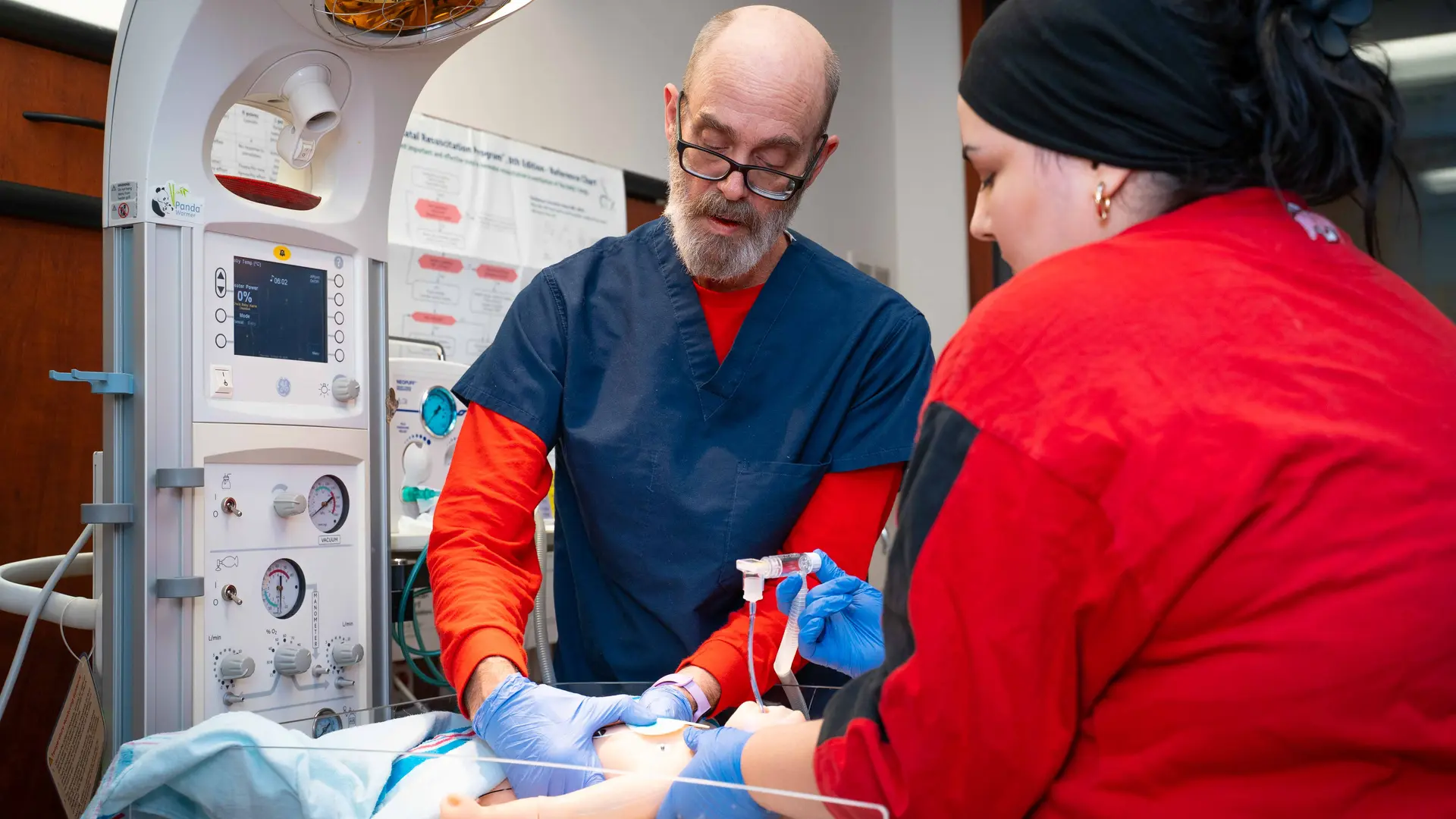
Neonatal Nurse Practitioner
Use your expertise to deliver evidence-based, lifesaving care to neonates (up to two years of age) — especially those born prematurely or with critical conditions — while supporting families during some of their most challenging moments.
At Ohio State, you’ll be part of one of the nation’s most comprehensive health science centers — where innovation, research and collaboration thrive. Guided by world-class faculty and dedicated mentors, you’ll gain clinically rigorous, evidence-based training that prepares you to lead in today’s healthcare environment. You will build skills across diverse settings — from community-based primary care agencies to The Ohio State University Wexner Medical Center’s renowned teaching hospitals. Along the way, you’ll benefit from hands-on experiences, interdisciplinary collaboration with healthcare professionals and the support of expert preceptors committed to your growth.
Apply through one of our programs
Applicants must meet specific neonatal experience requirements. Prior to beginning clinical practicum experiences, students must have 24 months of full-time RN experience in a Level III or IV NICU. Students who do not yet meet this requirement at the time of admission may work in a NICU while completing non-clinical coursework. To be eligible for national certification as a neonatal nurse practitioner, students must have two years of full-time NICU RN experience within the previous five years. Visit the program page to learn more about admission requirements, curriculum and how to apply.
Online
- Nurses seeking master’s level preparation
- Certified advanced practice nurses seeking additional specialization
- Nurses seeking advanced leadership training and the highest level of clinical education
On campus
- Non-nurses seeking master’s level preparation
- Nurses seeking to lead research and shape the future of healthcare
What is a neonatal nurse practitioner?
A neonatal nurse practitioner (NNP) is an advanced practice registered nurse (APRN) who specializes in the care of newborns who are premature, critically ill or experiencing complex medical conditions. They blend advanced clinical expertise with a holistic, family-centered approach to support the most vulnerable patients in high-acuity environments. They primarily practice in Level II-IV Neonatal Intensive Care Units (NICUs) and may also attend high-risk deliveries, participate in neonatal transport and provide care in outpatient follow-up and developmental clinics.
Our graduates enter the workforce with the skills and competencies to:
- Assume an advanced practice role as a neonatal nurse practitioner.
- Integrate theory and evidence into care for high-risk infants and their families.
- Design, implement, and evaluate healthcare strategies for critically ill and medically fragile neonates.
- Improve outcomes by engaging in evidence-based practice and quality improvement initiatives.
- Use leadership skills to influence policies affecting neonatal and family care.
- Adapt professionally within rapidly changing high-acuity environments. Contribute to the advancement of neonatal nursing.
Graduates are eligible for national board certification as a neonatal nurse practitioner through the National Certification Corporation (NCC).
Students will develop advanced knowledge and clinical expertise through specialty-focused coursework and immersive, supervised clinical practicum experiences. Clinical rotations allow students to apply these competencies in real-world settings under the guidance of expert preceptors. Clinical experiences meet the requirements for national certification in this specialty and are completed in approved sites across Ohio and other authorized states (as applicable). Students typically complete 16 to 20 hours per week of precepted clinical practice during their clinical courses.
Students in the MS in Nursing, Post-Master's and BSN to DNP options will complete coursework online and complete their clinicals in a level III or IV Neonatal Intensive Care Unit. Graduate Entry students will complete their pre-licensure coursework on campus and then complete their neonatal specific coursework online and specialty clinicals. All students enrolled in the NNP specialty coursework will be required to attend orientation and three on-campus seminars in Columbus to meet program requirements. These campus visits will occur over a two-to-four-day period (during the last four semesters) and enable students to participate in simulations, skills activities and gain valuable experiences essential to starting their career as an NNP.
The NNP curriculum is aligned with the American Association of Colleges of Nursing (AACN) Essentials: Core Competencies for Professional Nursing Education and the National Organization of Nurse Practitioner Faculties (NONPF) NP Role Core Competencies.
Courses include:
- Nursing 7305 Developmental Physiology and Pathophysiology of the High-Risk Neonate
- Nursing 7302 Advanced Health Assessment of the Neonate
- Nursing 7303 Advanced Newborn/Infant Pharmacology
- Nursing 7304 Developmental Care of the High-Risk Neonate and Family
- Nursing 7308.01 Advanced Practice Nursing: Care of the High-Risk Neonate I
- Nursing 7308.02 Advanced Practice Nursing: Care of the High-Risk Neonate II
- Nursing 7308.03 Advanced Practice Nursing: Care of the High-Risk Neonate III
- Nursing 7451 Diagnostic Reasoning
- Nursing 8895 Professional Role of the Advanced Practice Registered Nurse
For more information on curriculum, visit the academic program page of the degree you are seeking.